
EarthNews
Institute for Sustainable Energy Policies Set Sustainable Energy Zone
SustainableCommunity

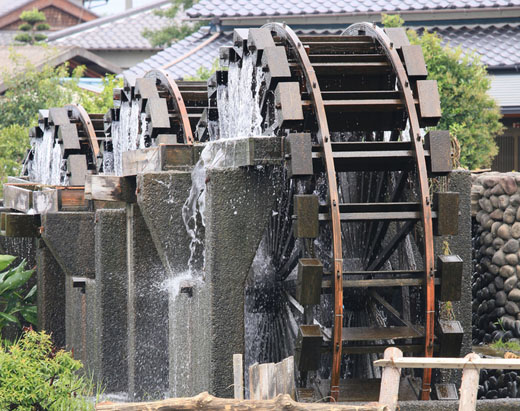
Creative Commons. Some Rights Reserved. Photo by gtknj
At greenz, renewable energy has long been a hot topic. With new technology constantly being developed, it seems that possibilities are forever expanding. However, the day that we can supply all of societies energy needs by renewable energy alone still appears a long way off. Saying that, if we look at specific zones, it seems as though this elusive future may already be here.
So, what exactly are these so called ‘Sustainable Energy Zones’?
‘Sustainable energy zone’ is a phrase coined by a research group lead by Chiba University professor Hidefumi Kurasaka, and refers to ‘a zone where all energy requirements can be met by renewable, natural energy created within that zone’.
In this case, renewable energy refers to photovoltaic (solar), wind, geothermal, biomass, and small-scale hydro, and the ratio of supply in respect to demand is referred to as the supply rate. If the supply rate is more than 100%, the area is classified as a sustainable energy zone.
Currently, while classification criteria is limited to electricity only, there are 76 municipalities in Japan that are classed as sustainable energy zones (as of July 2007).
The top five are:
#1 Yanaizu Town, Kawanuma District, Fukushima Prefecture
Supply rate: 3290%
Main source: Geothermal
#2 Kokonoe Town, Kusu District, Oita Prefecture
Supply rate: 3123%
Main source: Geothermal
#3 Kuni Village, Agatsuma District, Gunma Prefecture
Supply rate: 1333%
Main source: Small-scale hydro
#4 Higashidoori Village, Shimokita District, Aomori Prefecture
Supply rate: 1269%
Main source: Wind
#5 Itsuki Village, Kuma District, Kumamoto Prefecture
Supply rate: 907%
Main source: Small-scale hydro
(From the Sustainable Zone ‘List of 100% Energy Sustainable Zones’)
The extremely high supply rates of the top two zones, Yanaizu in Fukushima, and Kokone in Oita with supply rates of over 3000% are due to large scale geothermal generators built in the zone. However overall 70% of the zones have small-scale hydroelectric plants (in-stream units under 10MW), signifying just how well suited the geography in Japan is for small-scale hydroelectric generation.
Before you jump to the conclusion that the answer to Japans renewable energy worries has arrived, let’s take a closer look at the concept of sustainable energy zones, and exactly what supply rates indicate.
I believe there are two problems with this notion of sustainable energy zones. First is the problem of scale. Here we are looking at individual municipalities, however when considering prefectures as a whole, the highest rate is Oita at 30.8%, with only 9 prefectures totaling above 10%. As a whole, Japans renewable energy supply rate is a mere 3.35%. Therefore, this amazing supply rate of 3290% is only possible when looking at individual municipalities.
The second problem, which is related to the first, is the relationship between the supply rate and actual measures taken by the municipalities. In many cases, the high supply rate is not a result of energy measures taken by the municipality, but rather an outside power company having chosen that site for development. Therefore having a high supply rate does not necessarily mean the area has advanced electricity measures in place, and there is no point labeling a municipality good or bad based solely on this figure.
However, this doesn’t change the fact that sustainable energy zones exist, and if we take the idea of supply rates and expand it to other contexts, maybe we can find potential advanced electricity zones here in Japan. If the right measures are implemented in these zones, a model can be created, and emulated elsewhere.
For simplicities sake, let’s take a look at the top two municipalities, Yanaizu in Fukushima, and Kokone in Oita. Both areas have abundant natural hot springs. One can easily link hot springs with geothermal power generation. Now if we brought together geothermal power generation as an industry, and hot springs as a tourist attraction, could we not create an energy self-sufficient community?
For example, an electric train could run from the geothermal plant to each of the hot springs, and vehicles with gasoline engines could be banned from the hot spring area, keeping all transport electric. Zermatt in Switzerland has already proven the possibility of limiting transportation in a tourist area to electric, and policies such as this can increase the overall value of the area as a tourist destination.
The important thing is not just to say ‘wow, some places have such an abundance of renewable energy’, but consider how we can use this to create a sustainable society. This will give new importance to these numbers and what they indicate.
Maybe the first step can be a geothermal powered hot spring resort!
This article is translated from the original Japanese post
2010-09-063 days left
Sep 6 GREEN LEADERS FORUM (GLF8): CSR & Sustainability Communications
2010-09-096 days left
September 9 Green Drinks Tokyo: Love Your Community, Love Sustainability
2010-09-118 days left

A selection of classic greenz.jp articles. See why they are so popular!
SustainableCommunity
LEED versus CASBEE: A Comparison Between Two Green Building Certification Systems
SustainableCommunity
CulturalCreative
GreenBusiness
GreenBusiness
GreenBusiness
CulturalCreative
CulturalCreative
SustainableCommunity
Roof Gardens: A Smart Solution for Japan’s Dense Neighborhoods